Turning Old Keys into Whimsical Wind Chimes
I’m slightly a hoarder. I never throw away old keys…I don’t even know why because when the lock changes it’s not like keeping the old key is helpful at all, yet here we are.
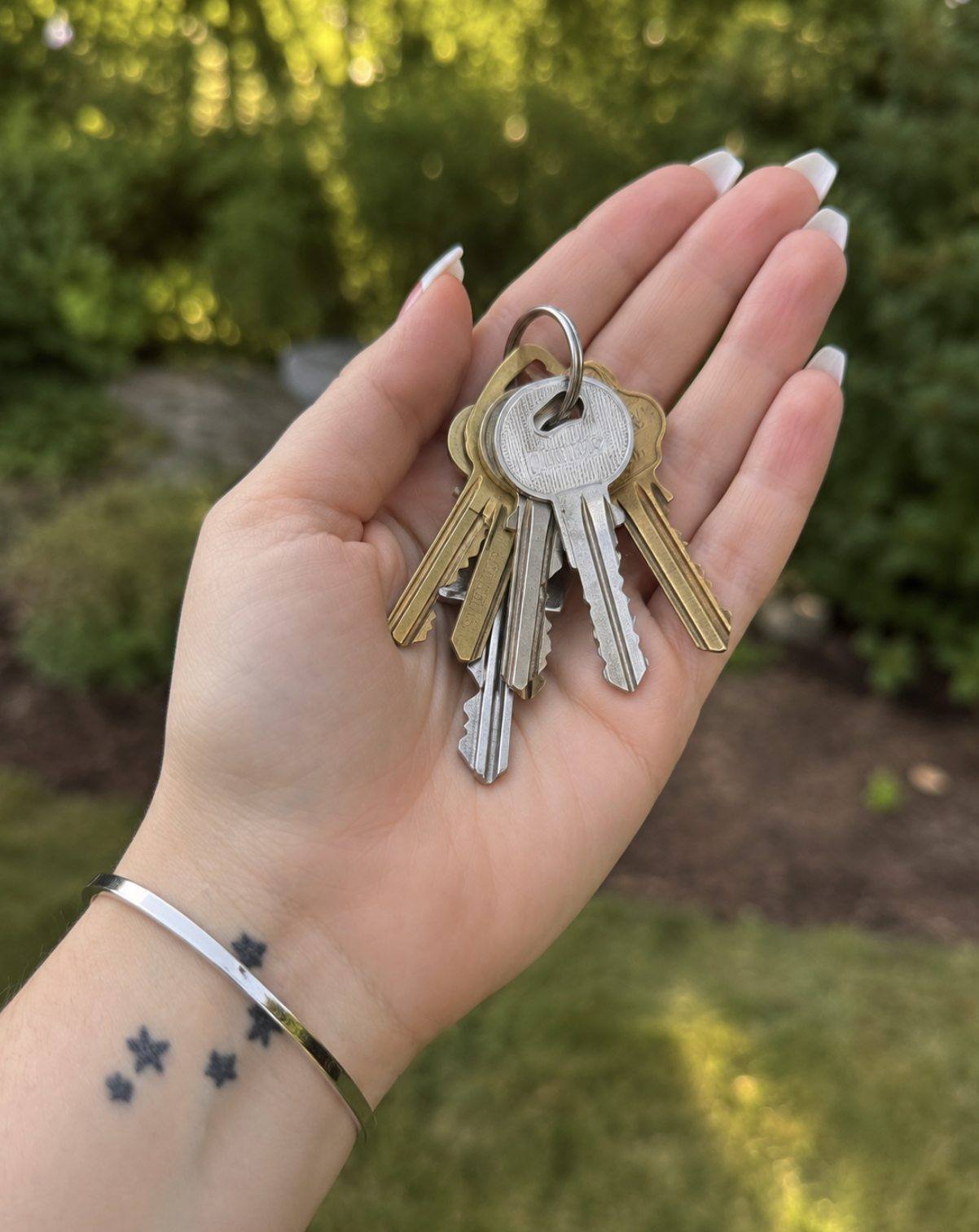
I have an entire drawer full of random keys. There are brass ones that once unlocked my first apartment, silver ones from a car I no longer own (I totaled that poor little Honda), a heavy black skeleton key that belonged to who-knows-what I probably found somewhere and kept because I thought it looked cool.
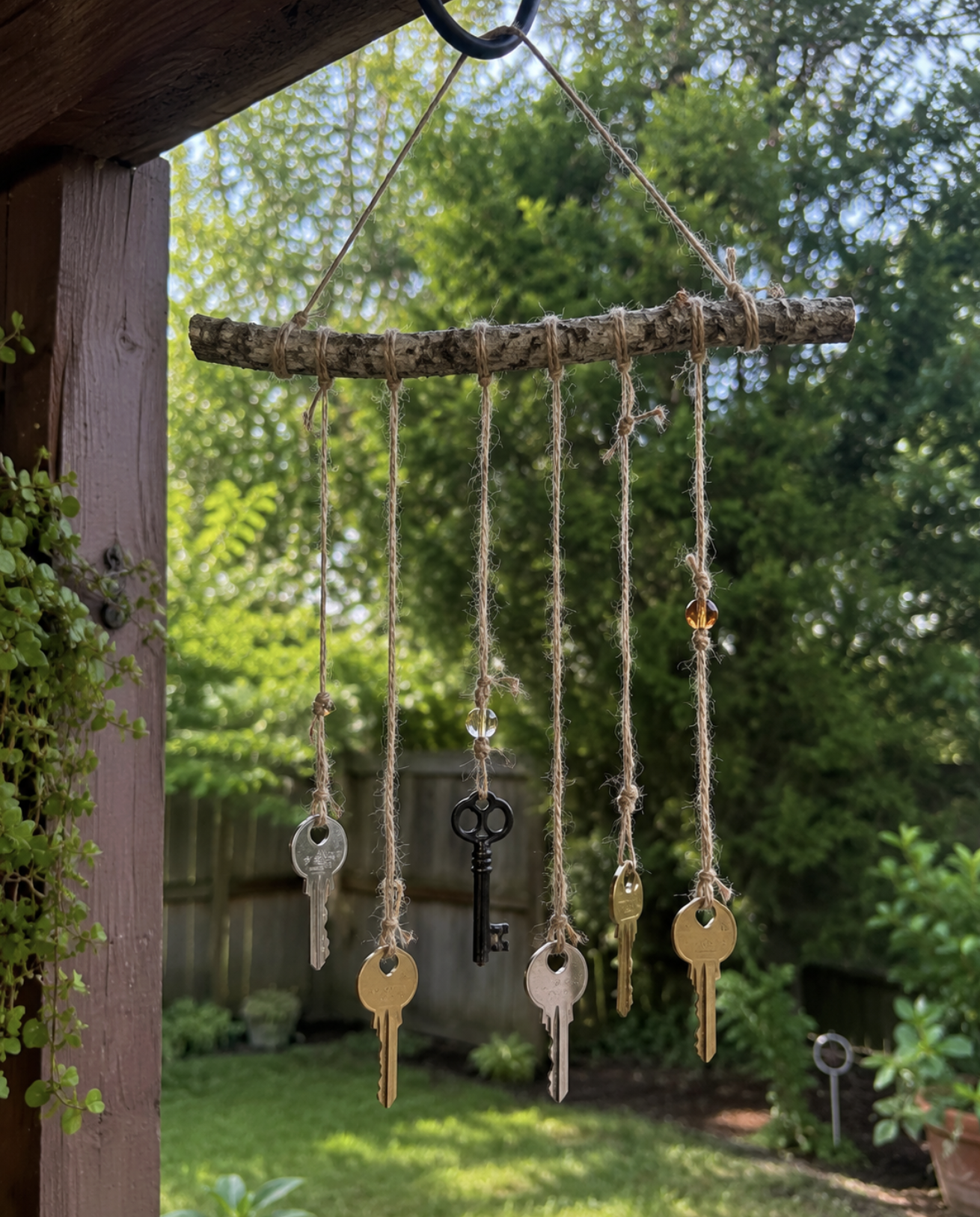
The thing is though, I love keys. They’re heavy in your palm and slightly tarnished, carrying the weight of old stories and old things. The other day though I decided to take some of those keys and thread them onto twine with a few glass beads, suspend them from a weathered branch, and it was absolutely whimsy-maxing at its finest.
They’re outside now, and the breeze catches them and they sing. Voila! Yesterday’s clutter becomes today’s gentle music.
This is the kind of dopamine hobby I love the most because it’s zero pressure, and maximum magic. A little upcycling and the soft satisfaction of turning something useless into something that moves with the wind. That’s exactly the vibe I’m going for, with mismatched keys dancing on twine, beads catching the light, all hanging from a simple driftwood branch in a garden that feels alive.
If you’ve been collecting random keys “just in case” (we’ve all been there), this project is your permission slip to finally let them go and turn them into something beautiful.
What You’ll Need
Most of this will already be lurking in your junk drawer or garage. Keep it simple and forgiving because wabi-sabi is the whole point.
A handful (or two) of old keys in varying sizes, shapes, and metals (the more eclectic, the prettier the sound)
One sturdy branch, piece of driftwood, or curved stick (about 12–18 inches long works beautifully) I’m not putting an affiliate link here, go out into the forest and find yourself one!
Hemp twine, jute rope, or natural cotton cord (roughly 4–6 feet total)
Assorted beads, crystals, or small glass charms (clear, amber, or anything that catches light and makes a cute sound)
Optional but lovely: small metal rings or key hooks if you want to add extra keys easily; a hot glue gun for securing beads; a small drill or awl if your branch needs extra holes
How to Make Your Key Wind Chimes (Step by Step)
Step 1: Prepare your branch
Lay your branch out and decide how you want it to hang. I like a gentle curve, and I’m also a clean freak, so I scrubbed mine with a brillo pad to try to make it look a little more smooth. It worked decently enough. Cut 5–7 lengths of twine (varying from 12 to 24 inches) for the hanging strands. Tie a loop at the top of each for attaching to the branch later. If you want variation, you can also hammer in some nails for the strings to attach to, but totally your call.
Step 2: Choose your keys
Spread your keys out on a table. Mix metals, sizes, and shapes so it’s more fun to look at later. Maybe try for some brass next to silver next to that mysterious black ornate one. This is the fun, low-stakes part. Let your hands decide what “sounds” good together. There are no wrong answers.
Step 3: String your chimes
Thread a length of twine through the hole at the top of a key (most keys already have them, if they don’t I’m not qualified to tell you how to drill one). Slide on 2–4 beads above the key for sparkle and a bit of weight. Tie a knot or two to hold everything in place (I used glue too because that’s just who I am, and I got tired of tying knots).
Repeat for each strand, varying the lengths and bead combinations so the keys hang at different heights. Some strands can have two or three keys stacked for richer sound and double the fun.
Step 4: Attach to the branch
Space your twine strands evenly along the branch. Tie each one securely with a simple knot or two. If your branch is slippery, a tiny dab of hot glue under the knot helps. Then, tie two longer pieces of twine to each end of the branch (or one long piece looped over the middle) to create the hanger.
Step 5: Hang it up and let the wind do its thing
Find a spot where it can catch a breeze, either a porch, garden hook, or indoors near an open window. Give it a gentle tap and adjust any strands that feel off. That’s it! You’ve just made music from what most people would toss.
Why This Counts as a Dopamine Hobby
There’s something deeply satisfying about rescuing objects that have outlived their original purpose. Each key once opened a door, but now it opens a little pocket of calm every time the wind blows. The tactile jangle as you sort them, the soft clicks of beads sliding into place, the moment the first breeze makes them sing, these are little micro-wins that light up your brain without any pressure to “get it right.”
It’s upcycling at its gentlest with no landfill guilt. Also, that unpredictable, metallic lullaby is pure nervous-system reset, gentle enough for meditation, whimsical enough to make you smile every single time you walk by.
This project is basically free and zero-waste. Those keys were already taking up space; now they’re giving back. If you want to go extra gentle on the planet, source your branch from a recent storm or a neighborhood walk (never cut live wood).
A couple of kind reminders are that heavier keys make deeper tones; lighter ones give higher tinkles. Beads aren’t just pretty, they also add weight so the keys catch the wind better. If you live in a very windy spot, space the strands a little farther apart so they don’t tangle.
Come Make Some Music
In a world that’s loud and fast most of the time, there’s something sacred about creating something that only speaks when the wind asks it to. Your old keys have waited long enough, give them a new life, hang them where the breeze can find them, and let them remind you that even forgotten things can still sing.
I’d love to see what your version sounds like, send me a photo and I’ll post it here!
Related Reads You Might Enjoy:
Why Your Houseplants Might Be Gossiping (and Other Strange Plant Behaviors)
When Plants Glow: The Science (and Magic) Behind Bioluminescent Flora
Make Plantable Seed Paper From Junk Mail: A Crafty Way to Grow Beauty from Trash
10 Plants You Can Grow Indoors Year-Round (Even If You Don’t Have a Green Thumb)
The Sound of Trees Crying: What Plants Really Do When They’re Stressed