The Gentle Art of Turning Spare Buttons into Whimsical Plant Picks
I have a box of buttons that I’ve kept for literal years now. You know exactly what I’m talking about. That tiny clear packet pinned inside the tag of your new sweater, jacket, or shirt that you pull off and put in a safe place. Two, three, maybe four perfect spare buttons tucked away “just in case.” The thing is though, I think I have buttons from clothes I don’t even have anymore to be honest.
For the longest time they lived in my junk drawer, forgotten alongside dried-up pens, single earrings, and mystery keys. (Why do I keep old keys?) Then yesterday I was cleaning up and I dumped the whole collection onto the table. I adored the way different sizes and shades suddenly looked like they belonged together almost like they fermented together over the years. Sorry, sommelier reference.
If you’ve been here before you know I love turning something ordinary and overlooked into a little piece of beauty that could actually stay.
I’ve been searching for hobbies that didn’t demand perfection or a lot of energy, and here it was, staring at me through button eyes. Here’s one quiet, forgiving craft that turns those spare buttons into whimsical button flowers you poke right into the soil of your favorite houseplant. No green thumb required for the flowers themselves, and no perfection needed at all.
Grab your buttons, a little glue, crafting wire, and the sweet satisfaction of giving your living plants a pop of handmade color that never wilts.
What You’ll Need
A handful of spare buttons (mix of sizes and colors works beautifully, the more mismatched, the more charming)
Hot glue gun (or strong craft glue like E6000 if you prefer a slower pace or are clumsy with burns).
Thin craft wire (about 6–10 inches per flower, depending on plant height).
Optional but lovely: green floral tape for wrapping stems, a few small beads or a single contrasting button for the flower center, wire cutters.
That’s truly it. Everything else is already patiently waiting in your drawer or kitchen drawer. Your houseplant does the rest. If you run low on wire, pipe cleaners or even sturdy twist ties can work in a pinch.
How to Make Your Button Flowers (Step by Step)
Step 1
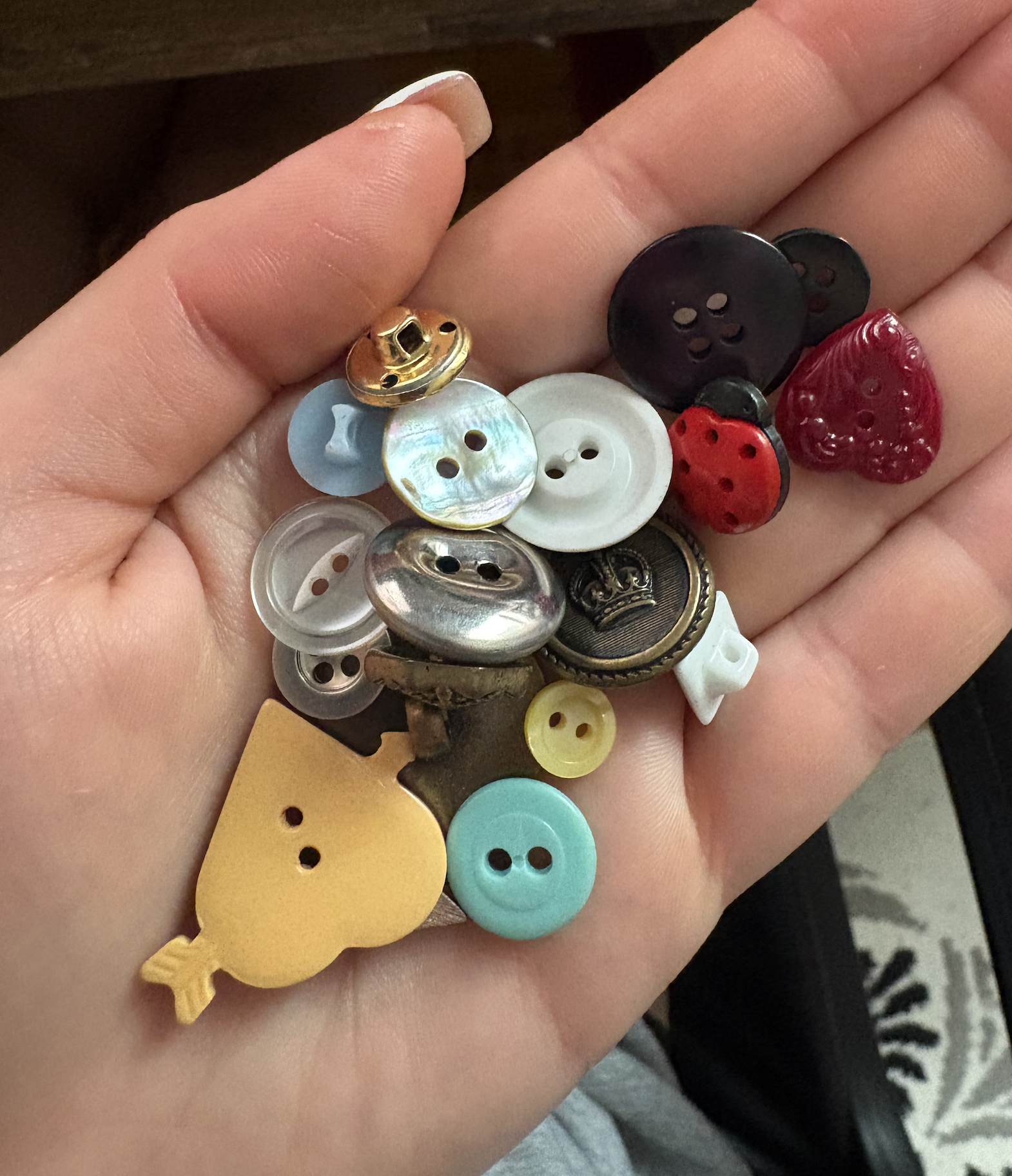
Spread your buttons out on the table and let yourself play. There is no wrong way here and if you’re asking why would I do this, you might be in the wrong place. Choose a larger button (or bead) for the center and smaller ones for petals. Let your mood guide the colors, I do pastels for calm, bright pops for joy, or a gentle monochrome for quiet focus.
Step 2
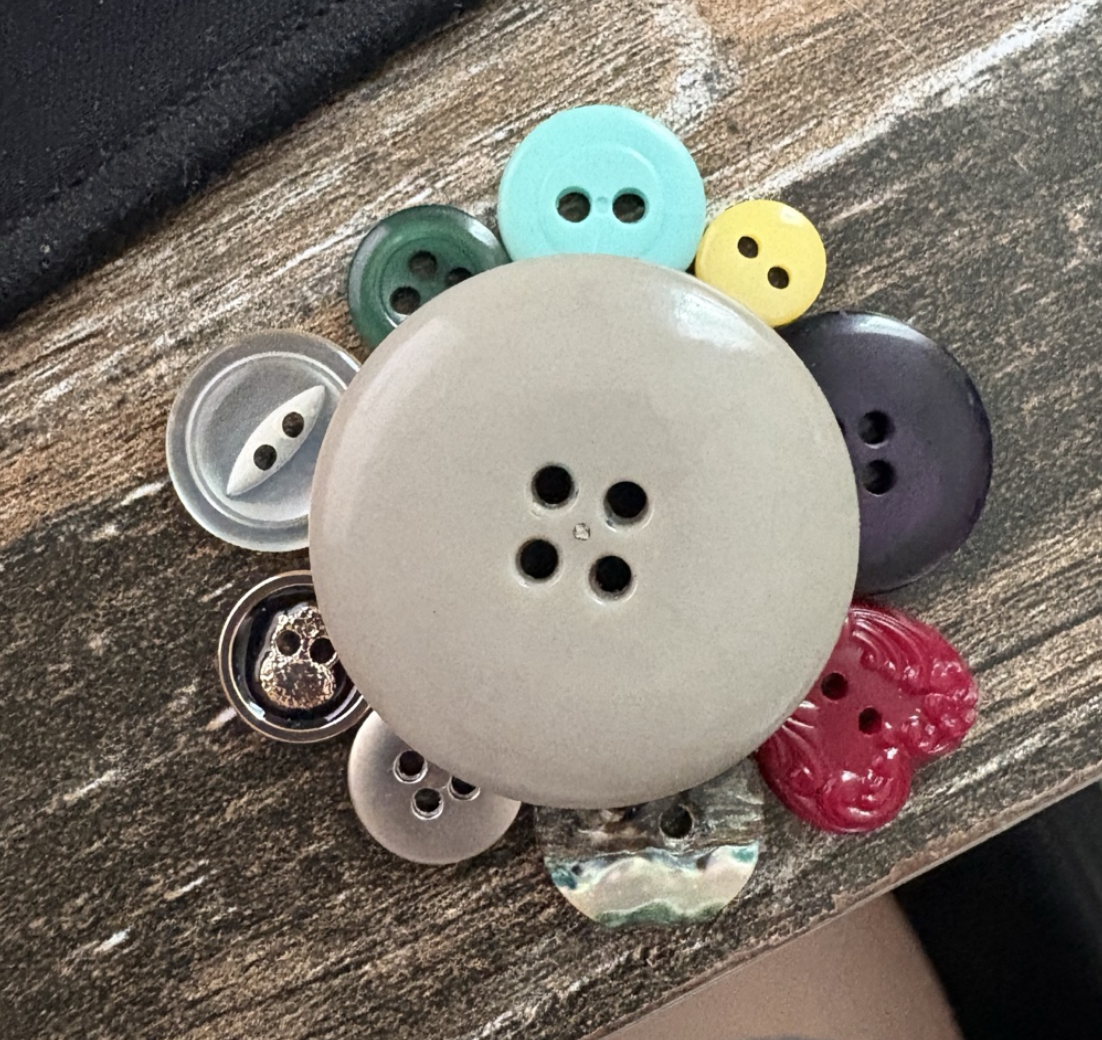
Start with your center piece. Use a tiny dot of hot glue to attach the other petal buttons around it, slightly overlapping the edges. Or you stack them on top of each other. I have images of them down both ways. You don’t really need glue if you want them to have a more rustic look and stack them instead. Hold each one for just a few seconds while the glue sets. You just want the holes to line up properly. That’s where the personality lives. If a petal sits crooked, smile and keep going. Wabi-sabi in action.
Step 3
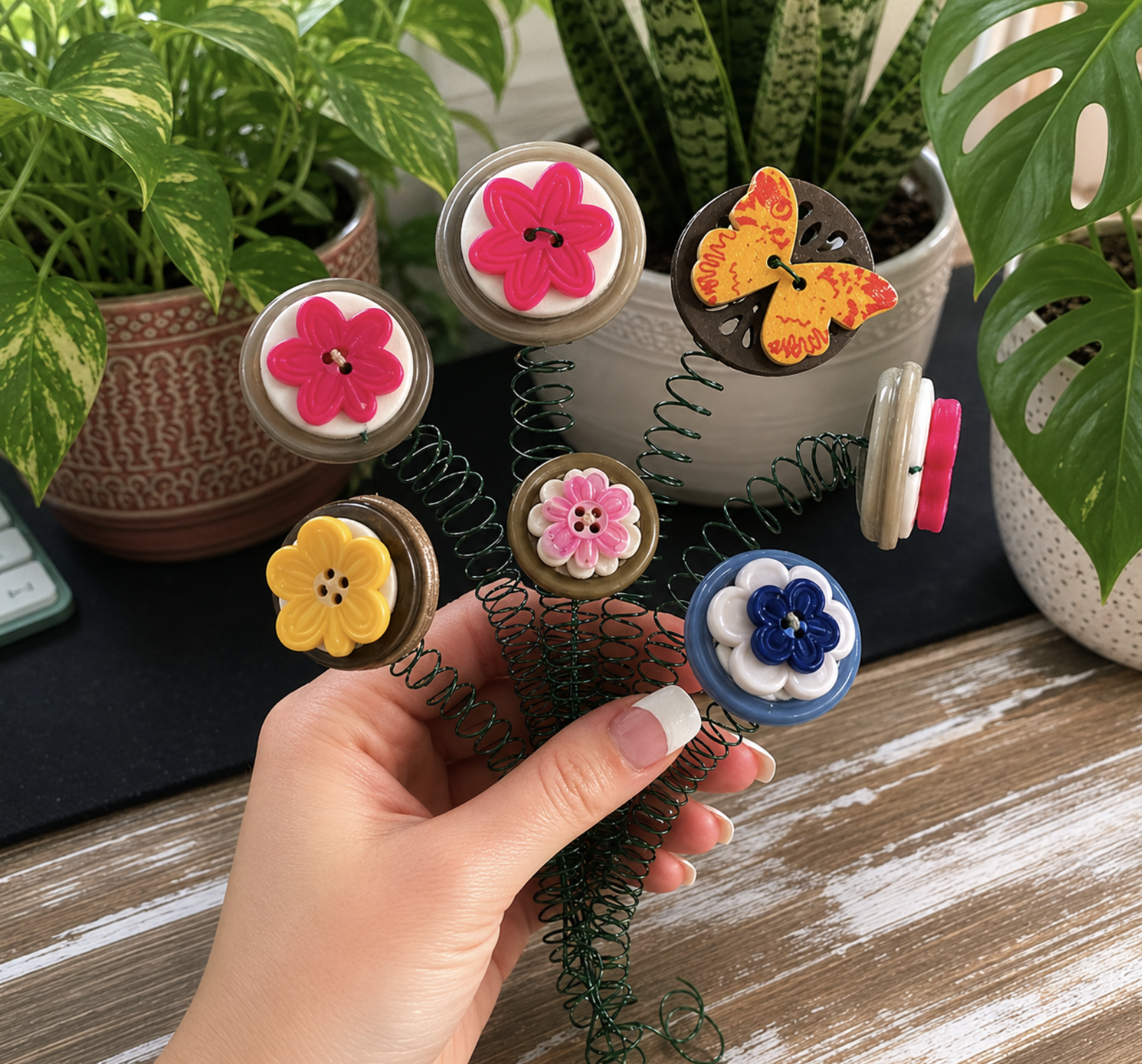
Poke one end of a piece of floral wire securely to the back of your finished flower. If you like a softer look, wrap the wire with green floral tape, gently stretching it as you go. Or leave the wire bare and simple, both feel equally beautiful. Let the glue cool completely so everything stays sturdy when you plant it. Twist the wire once it’s poked through so that it sits securely.
Step 4
Make a Bouquet’s Worth. Repeat until you have 6–10 flowers (or however many feel right for your plant). Take your time and make them in different ways. This is the part where your hands stay busy in the kindest way and your mind gets to rest. I liked to use the buttons that looked like flowers already as a stack and then the ones that looked too much like buttons as the big flowers that I glued together.
Step 5
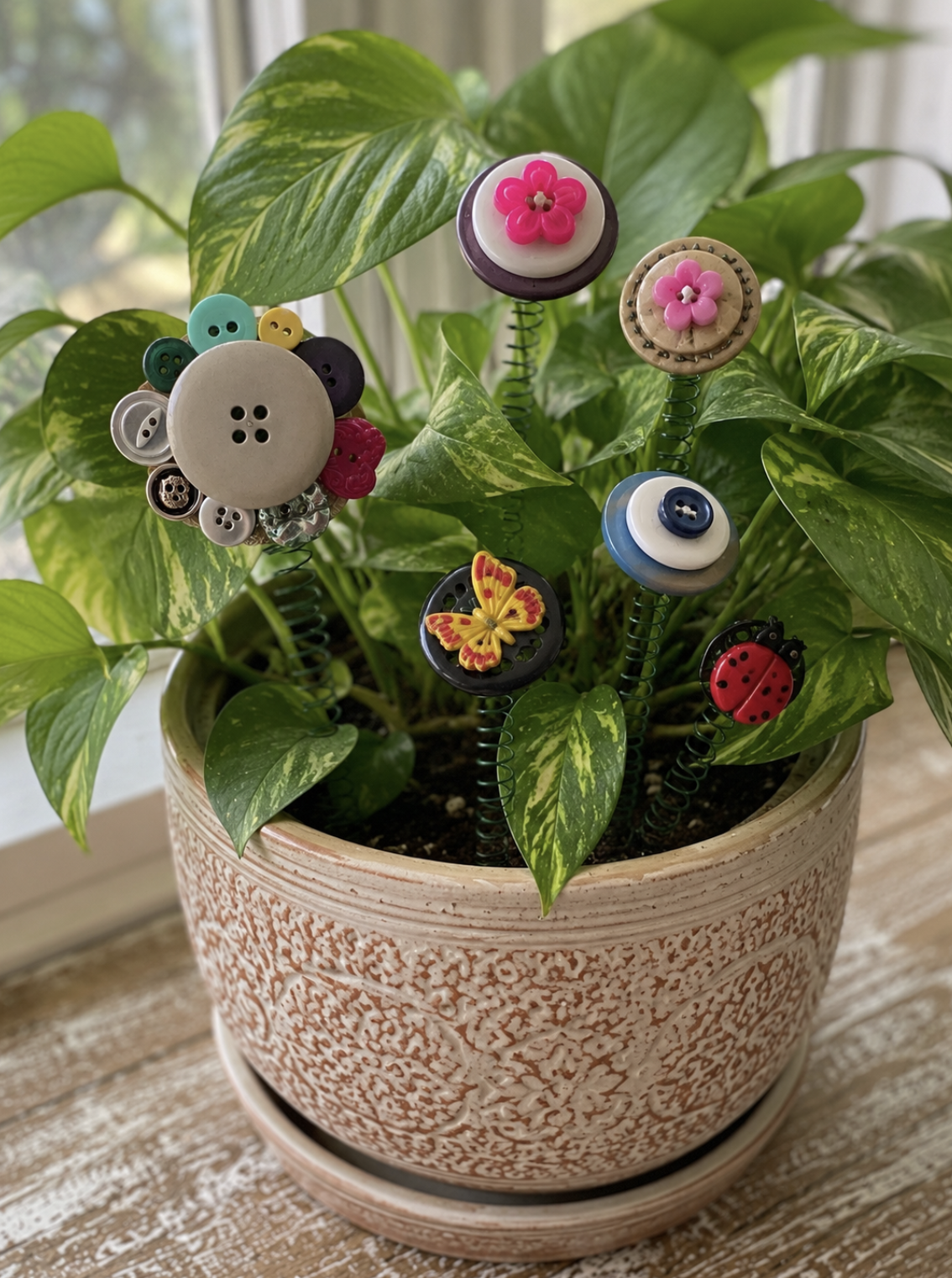
Plant Them. Gently poke the wire stems into the soil of your houseplant, tucking them among the real leaves so the button flowers peek out naturally. Space them at different heights and angles for that playful, organic look, like they grew there on purpose. Adjust until it feels just right. Step back and admire your work. These are beyond fun to make and cute to smile at on a bad day.
There’s no pressure to do anything crazy with them. The first few picks are enough as they are and don’t stress if they’re clunky or awkward.
Why This Counts as a Dopamine Hobby
This is exactly the kind of hobby you need in your life.
While chasing big creative highs or producing something Instagram-perfect is a lot of fun, this is all about those small, steady releases of feel-good brain chemicals that come from gentle, sensory, low-pressure making.
Sorting through your spare buttons is pure tactile comfort, and the soft clicks as they tumble together, is pure magic to my brain. There’s no “right” palette or design involved at all either. Your brain gets to play without any judgment or expectations, and that freedom alone is soothing.
Each flower you build delivers tiny, achievable wins: a petal that sticks just so, a center button that suddenly makes the whole thing pop. Those micro-moments of “I did that” add up to a gentle dopamine trickle, the same soft satisfaction you get from folding laundry or lighting a candle, but with the added joy of creating something new. Also, without the annoyance of folding laundry because that’s purely the worst part.
I think the best part of all of this is tucking those finished blooms into the soil of a snake plant, monstera, pothos, or whatever green friend already lives on your windowsill. Suddenly your everyday houseplant has a cheerful new personality. Every time you water it, walk past it, or catch it in the morning light, you get another little hit of joy.
There’s something soothing and fun about the wabi-sabi of it all: imperfect shapes, mismatched petals, and the knowledge that absolutely nothing is wasted. Your nervous system gets a break from the overly intense world and your mind can wander or settle into the present moment. When you’re finished, you’ve transformed “waste” into something that sparks a little smile every single day, right there in the middle of your living green things. It’s low-mess, low-stakes, and deeply forgiving. Exactly the kind of hobby that feels like relaxing after a long day of thinking too hard about too many things.
Many of us who struggle with anxiety, perfectionism, or decision fatigue find these micro-crafts especially healing. The repetitive motions are meditative and the small successes build quiet confidence. The finished result lives with you, offering ongoing gentle reinforcement that your hands (and your choices) can create joy.
The Sustainability Bonus: Upcycling in a Gentle Way
Beyond the dopamine, there’s a deeper satisfaction in knowing you’re keeping something out of the landfill. Spare buttons are one of the most common “just-in-case” items that get thrown away. By turning them into plant picks you’re doing upcycling. It’s a tiny, doable way to align your hobbies with values that feel good.
Almost any houseplant works, but some show them off especially well like the Snake plants and ZZ plants because their tall, upright leaves let the flowers stand out like little flags. Pothos and spider plants look charming with button flowers dangling among the vines, and succulents and small herbs are perfect for mini single-stem versions.
Troubleshooting Common Issues
If your glue isn’t holding let it cool longer or switch to E6000.
Sometimes some of my stems were too floppy if I used a lot of buttons or heavy ones. Just be sure to double up the wire or use thicker floral wire so they stand upright.
If your flowers are tipping over try to bury the stem a little deeper or add a small pebble for weight at the base. Everything is fixable and part of the forgiving charm of the craft.
If you make your own button plant picks, I would love to see it. Send me a photo, I may even share your creation here (with full credit, of course). Your version might just inspire the next person who’s staring at their own little packet of extras wondering what on earth to do with them. Your spare buttons have been waiting patiently, now they can bloom right alongside your houseplants.
Related Reads You Might Enjoy:
Why Your Houseplants Might Be Gossiping (and Other Strange Plant Behaviors)
When Plants Glow: The Science (and Magic) Behind Bioluminescent Flora
Make Plantable Seed Paper From Junk Mail: A Crafty Way to Grow Beauty from Trash
10 Plants You Can Grow Indoors Year-Round (Even If You Don’t Have a Green Thumb)
The Sound of Trees Crying: What Plants Really Do When They’re Stressed